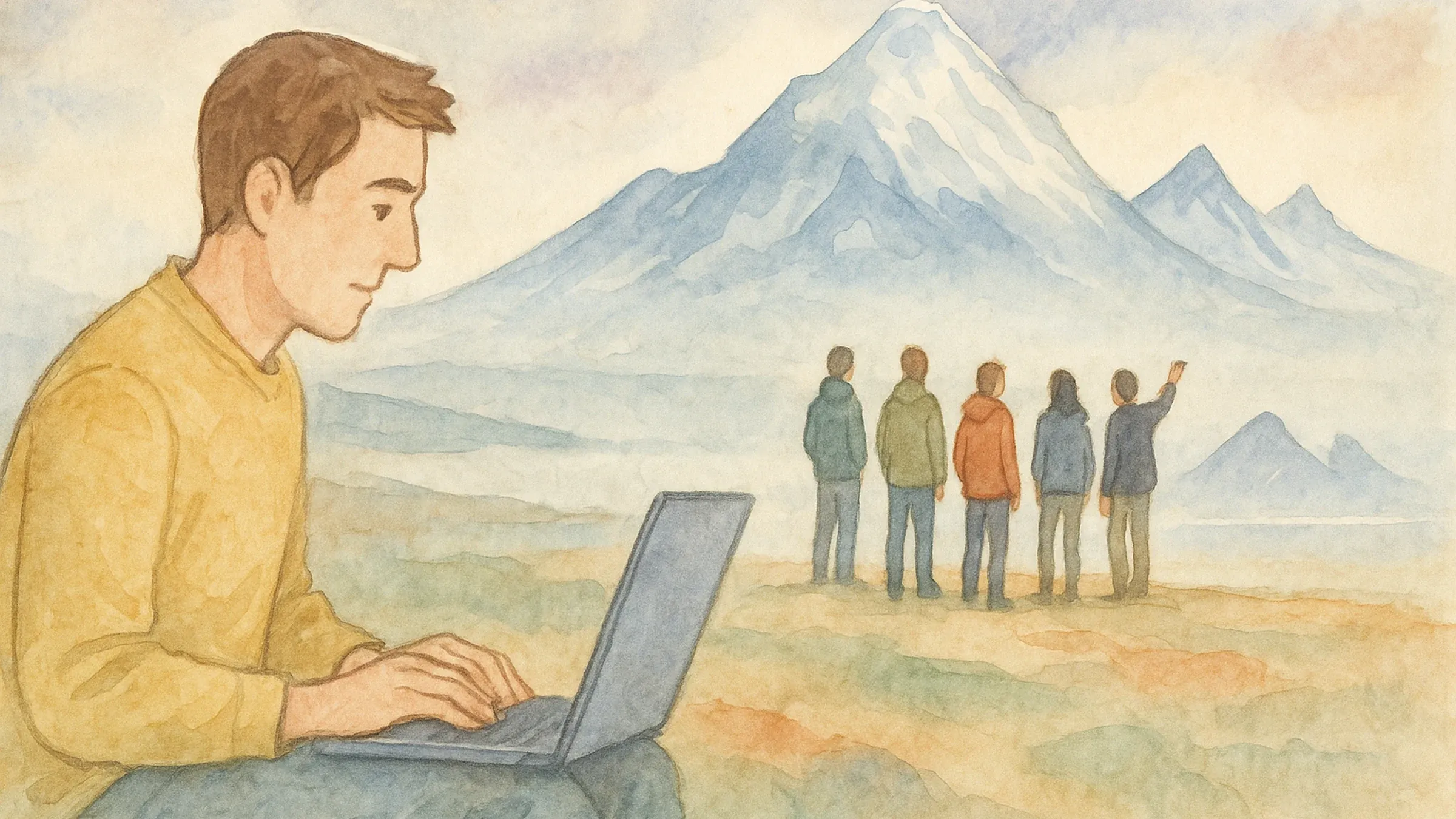
I Used AI to Plan Iceland With Five Friends. The Hard Part Was the Humans.
It is fantastic how AI can be useful, fun, needed, even to do a trip with your friends. In November, with a couple of folks — five people in total — we will drive around Iceland. For me this is a dream since I was young, because I dreamed being there, doing ice bath, nature, that kind of stuff.
Before AI, this kind of trip was destroying my brain. Searching manually, reading books, maybe visiting places to have information, putting together random blogs, maps, notes, videos. Maybe it is how my brain works, but when I have a lot of information that is unstructured, it is a problem for me.
So I told my friends: “Hey, I will use AI to help us. Because during the trip I don’t want to use AI. I want to live that experience.” I want AI before the trip so my brain can be free during the trip.
The app started everything
Everything started in my repository. I created an app that calculates the cost, the trips, the places that ideally we would love to visit, and all this kind of stuff. This was the first step: take the chaos and put it somewhere I can actually understand.
Then I shared it in the WhatsApp group. “Hey people, I did this one. Please go there and vote.” In the app you can vote if you would love to do some experience or maybe not, because we are five friends and you need to respect each other. It is not my Iceland trip, it is our Iceland trip.
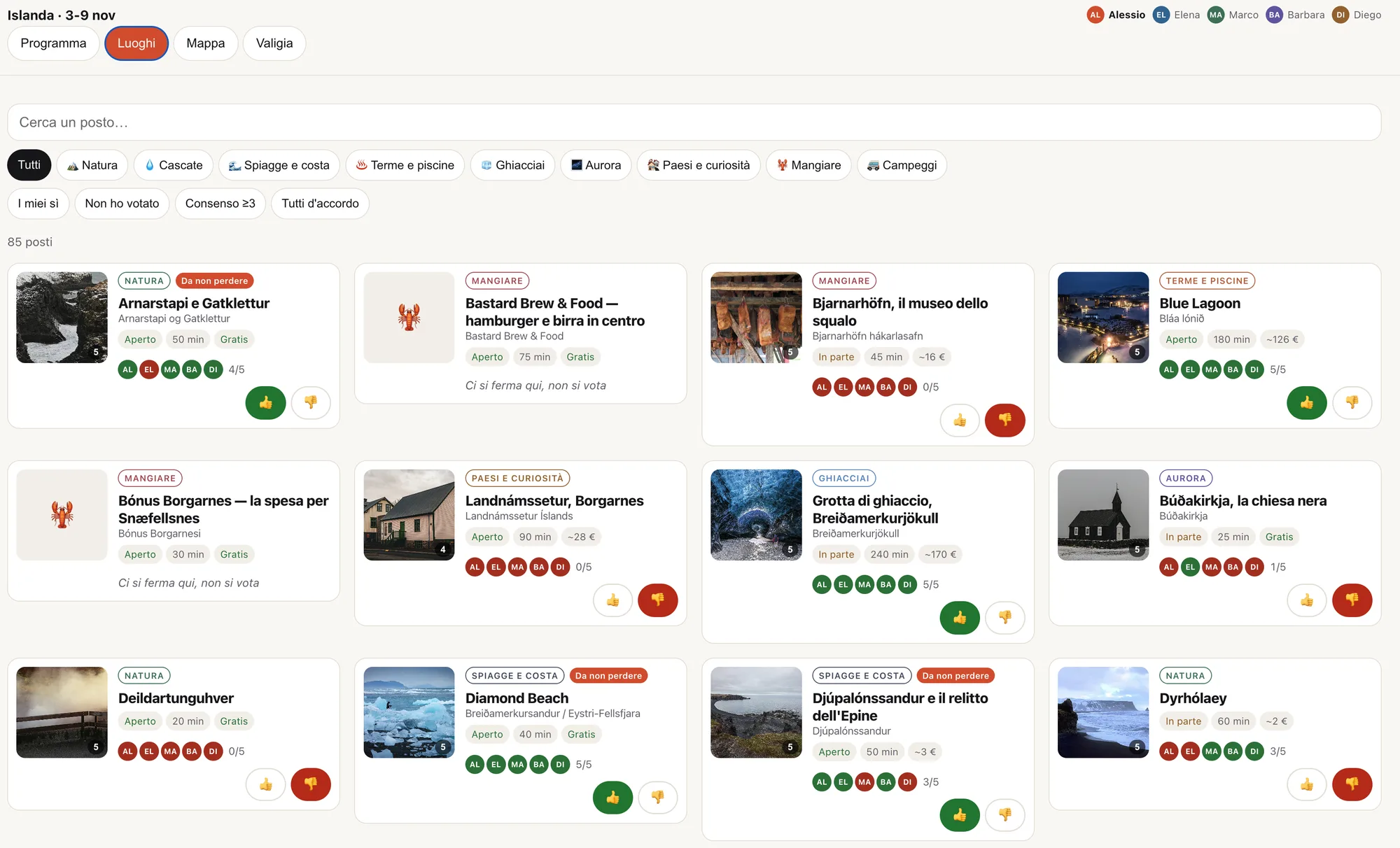
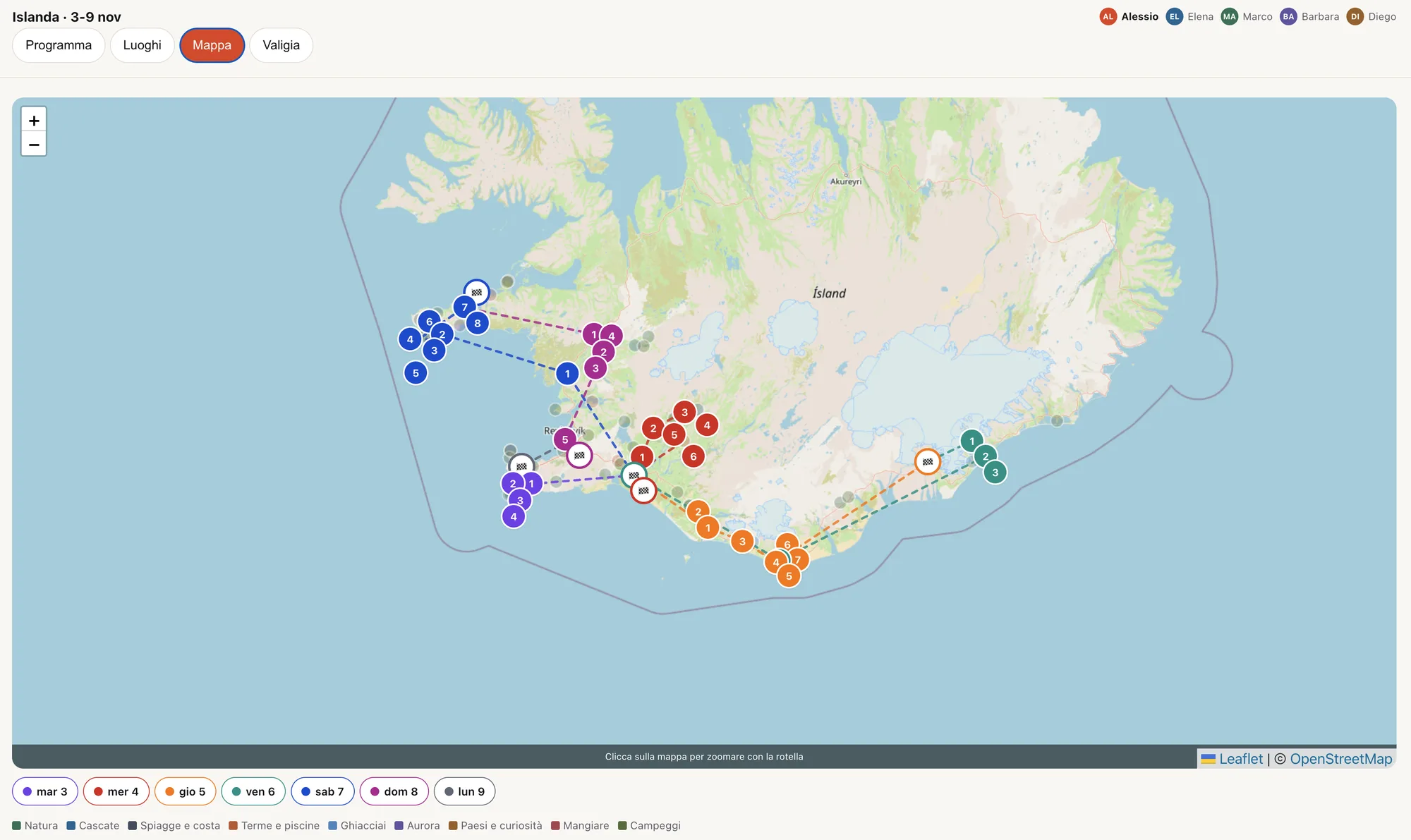
After multiple follow-ups — because yes, humans need follow-ups, and we will arrive there — we finally had the possible trip. Then I improved it because I am a visual person. I wanted roads, kilometers, how often we need to go to the supermarket, campsites, all the things that make the trip real in my head. The moment information becomes visual and structured, I can start thinking again.
I did something similar in the past when I was planning an XTerra with AI before, but this was different. This was not only performance, training, logistics. This was five humans, a country, bookings, money, expectations.
That’s our trip, not the AI trip
Then came the human validation. I said to my girlfriend: “Hey, can you check this one? Because maybe AI is far from being perfect, but that’s our trip, not the AI trip.” This is important. I don’t want AI deciding my life. I want AI helping me to see better.
She had done something similar with her ChatGPT license. So I imported her PDF and said to Carlo — this is how I call my Claude Code — “Please check this one and give me an artifact with all the discrepancies. What do I need to do? What is different?” And Carlo created a comparison that I could actually use.
Then Marco, another friend, arrived. Marco is more a paper and Microsoft Word person. He created yet another PDF, and I imported that too. “Hey Carlo, can you integrate all his changes, but also review them? Maybe he wrote something that is not good.” AI compared everything, validated some things, rejected others, and helped me move forward without losing my brain inside three PDFs.
This is the part I like: AI is fast, but humans still decide what is true for the trip.
Closing the loop with bookings
Now I am closing the loop and I want to use AI even to book the experiences. Opening a browser, pre-filling forms, sending emails, checking details. The experience is far from perfect, to be honest, but my brain is realizing that it is way better than before.
I can maintain control because I have an artifact. I can ask small but important things, like: “Can you convert ISK to euro?” or “Do they offer a refund policy?” For me these details matter. Maybe for someone else the detail is different, but this is the point: you tweak AI around what you care about.
We are far from being completely autonomous. I don’t know if one day we will be autonomous for this kind of stuff, maybe for something small, maybe yes. But all I can tell you is that this is already way better than before. Use AI everywhere, even for things that look easy, because easy things become complex the moment humans, money, and logistics are inside.
Then I wanted it in Google Calendar
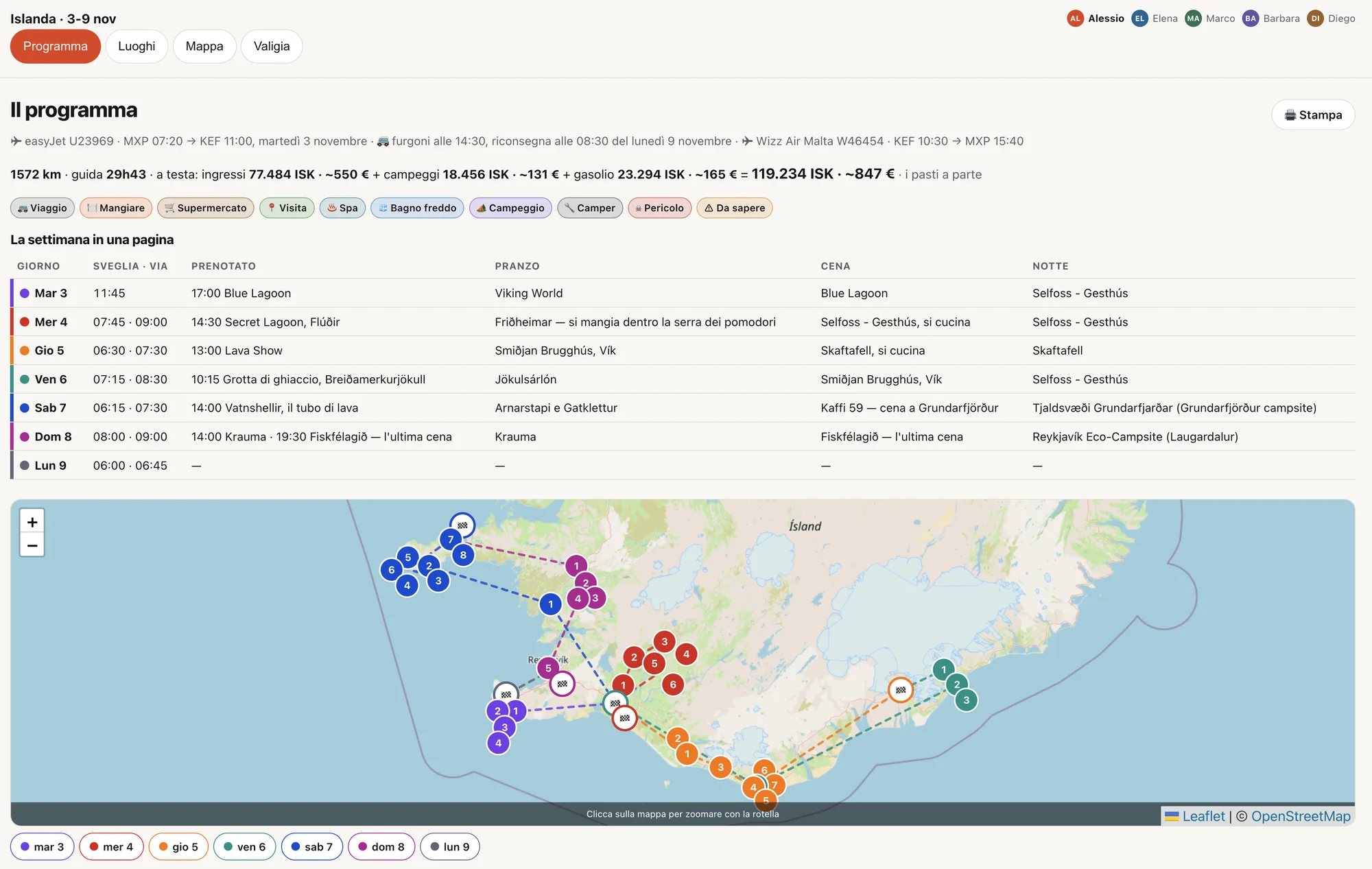
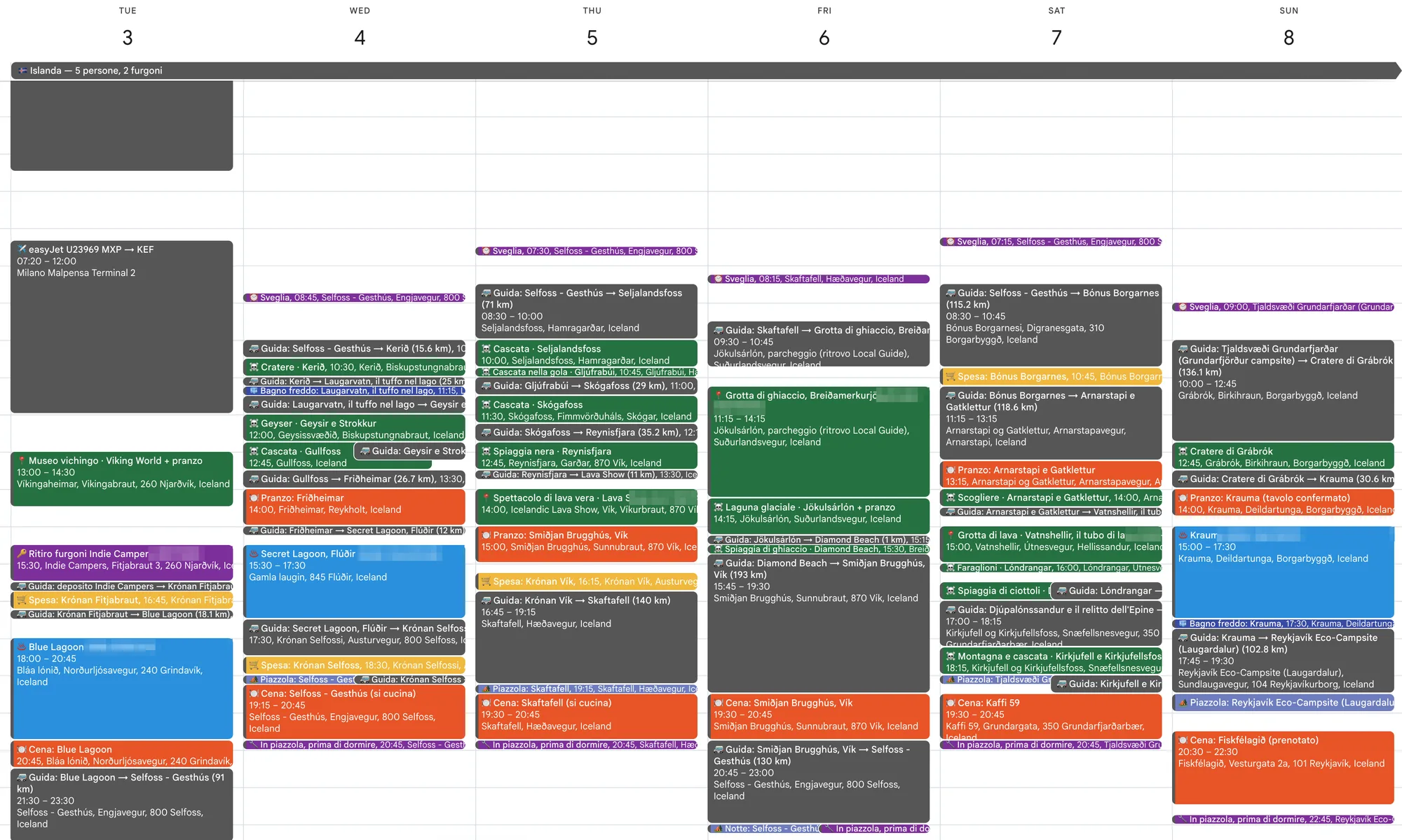
Once the app was there — costs, places, votes, all the mess of five friends trying to decide an Iceland road trip — the next thing I wanted was very simple: I wanted to see everything in Google Calendar. So I created the skill, with Carlo, my Claude Code buddy in the repo. And honestly, the result is pretty amazing, mostly because it shows the real complexity of a trip like this one.
A road trip looks romantic until you put every wake-up, every driving leg, every supermarket stop, and every campsite on a calendar. From 3 to 9 November: one calendar, five people, two campervans, with things like Selfoss to Seljalandsfoss, 71 km. Visits, lunches, supermarket stops, cold baths, campsites, booked experiences, clickable locations everywhere. The app says 1,572 km and 29h43 of driving in total. Seeing it like that is a nice punch in the face, but useful.
Context switching is still painful
The biggest pain is still context switching. So fucking painful. Even if AI does the majority of the stuff, I still need to open the browser, click there, see the details, understand different layouts, different colors, different rules, different prices. For me this is a real problem.
That’s also the reason why I created k0, my own system to reduce context switching with Claude Code. I want to be interrupted less, with the context that counts, in the moment that counts. Because if I need to jump between twenty tabs, three documents, WhatsApp, maps, and booking pages, my brain starts to leak.
I truly hope the big giants — Amazon, Apple, Anthropic, OpenAI — will reduce this and create more all-in-one solutions. Claude is doing a great job simplifying a lot of stuff, but we are far from there. AI can be powerful, but if the interface around it is fragmented, the human still pays the tax.
And booking experiences is terrible. Maybe terrible is not the right word. Fragmented is better. Every site has opinions, rules, strange flows, and maybe I need to create a booking website one day. Different story.
The real limit is not AI
Where there are humans in the loop, holy shit, we are far from perfect. Even with AI, you need to repeat the same story again and again. You have an artifact that should be updated, but maybe the context is not enough, so you open another session, then you need to train the session, maybe create a skill. Everything is still artificial and too complicated.
And then there is the speed. AI does a lot of stuff very fast, and you are not at the same pace. This creates a kind of internal frustration because you want to do more, but you can’t. Maybe tomorrow we will have Opus 6 or another acronym, another name, but our brain will still be there.
The real limitation is not AI, as always, it is humans.
During the entire process, the most difficult part was not AI. AI is pretty predictable. You ask something, it replies, the response is not good, not a big deal, you ask again. Humans are different. You write a message, they don’t reply. The responses are unstructured. You ask three questions, they answer one.
Holy fucking shit.
I hope humans will evolve and communicate better now that there are systems that can help us even to be better humans. Not colder. Not robots. Just clearer.
Curiosity is not dying
A lot of people tell me, “If you do everything with AI, you are not using your brain anymore. You are not curious anymore.” Are you kidding me? Are you serious?
Thanks to AI, I am way more curious than before. I learn way more stuff than before because I can learn from top to bottom, not always from bottom to top. I already wrote about learning top-down, and for me this is one of the biggest shifts. I don’t need to start with the boring mess. I can start from the shape, understand the map, and then go deep where I care.
AI will replace a lot of things. This is reality. I see it even with my own agents, because some of them reply on WhatsApp and call people better than me. But used properly, AI empowers you. It supercharges you. I strongly believe I am a better person, and I know more with AI than before.
AI does not kill curiosity if you use it to open doors instead of closing your brain.
So wish me good luck. When I start this trip, I want to switch off as much as possible. In reality not completely, because we need to drive and the app will help us to go from point to point, but I will try to print things on paper and use devices as little as possible.
I want a switch-off experience. Recharge my brain. Feel nature.
Be human again.
I love feedback.
Did this help? One tap — that's it.
Thanks 🙏
Want to add anything — or get in touch? Totally optional.
Got it — thank you. 🙏
Keep reading

The Hidden Cost of “I Can Clone This in Five Minutes”
Claude Code makes the first version easy. Building my own personal agent, Maria, reminded me what the hype hides: testing, learning, improving and maintaining, forever.
Forget the Ladder: Learning Top-Down in the AI Era
Bottom-up learning is a ladder; with LLMs you can start from the top and go down the layers when you need them. How I learned ElevenLabs agents in months, and why my kids are learning Arduino the same way.
What I Learned Building Carla and Andrea, My Two AI Agents
Two production agents, one on the phone and one on WhatsApp and email, rebuilt almost every day: evals and judges, shorter prompts, tools that know when not to fire, costs and model prices that keep moving, a North Star, and the humans in the loop, with the real numbers.